
What made you curious this week? How does learning feel different when you’re curious?
One of the things I enjoy most about illustration is discovering a technique and immediately wondering what else I could do with it.
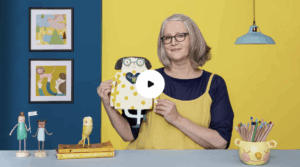
While exploring ideas for A Postcard to Myself, I came across a Domestika course by Sarah Hand on making papier-mâché figures. The character being made was wonderfully whimsical and immediately made me wonder how I could use the technique in my own work.
I completed the course and used what I had learned to make the models for my postcard. There was something incredibly satisfying about taking a technique I had just discovered and finding my own use for it.
It was also enormous fun. Time disappeared while I was sticking soggy pieces of paper onto my models — it felt rather like being a kid again.
Mixed media and texture
I have always been intrigued by mixed-media illustration, particularly the interaction between different materials, textures and ways of making.
Almost anything can become part of an illustration: conventional artists’ materials, rubbish, recycling, photographs, scraps of paper or something discovered in a junk shop. What interests me is what happens when those different elements are brought together into a single image.
There is something exciting about looking at an ordinary object — perhaps even something most people would throw away — and wondering what else it could become.
The more techniques I experiment with, the larger my visual vocabulary becomes. Each new material or process gives me another possible way of approaching an idea.
Making images from rubbish
That idea of transforming materials reminded me of Waste Land, a documentary about artist Vik Muniz and his work with the catadores of Jardim Gramacho, a vast landfill on the outskirts of Rio de Janeiro.
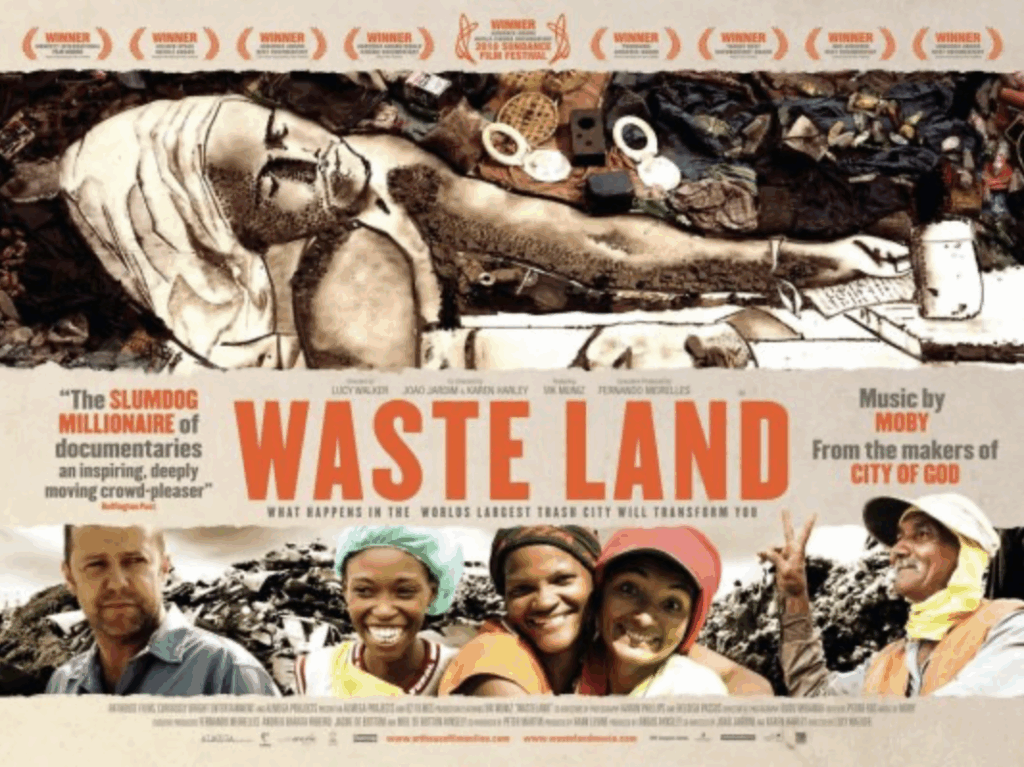
Muniz worked with seven people from the landfill to create enormous portraits using materials collected there. The images were assembled across a warehouse floor on such a huge scale that they had to be viewed from above to see the complete compositions.
What fascinated me was not simply the unusual material, but the relationship between the material and the subject. The rubbish wasn’t being used merely to create an interesting texture or effect; it was integral to what the work was about.
It was a striking example of how materials themselves can carry meaning — and how illustration and image-making can draw attention to people, places and issues that might otherwise be overlooked.