
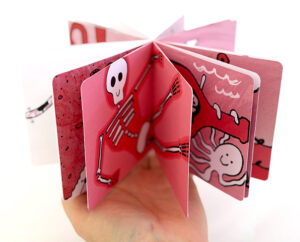
If a line was autonomous, what would it want to become? An investigation into hybridity, connection and infinity through illustration.
Introduction
This project started as an investigation into an abstract idea. If a line was autonomous, what would it choose to become? Would it try out different ideas before settling on the one? Or would it never settle, because to stop is to die, once it decides, it becomes inevitable, it never has the chance to reinvent itself again.
‘…one must never turn back to consider ones work, for this would mean to stop, and to stop is to die.’ (Yves Klein, 1961)
Project Overview
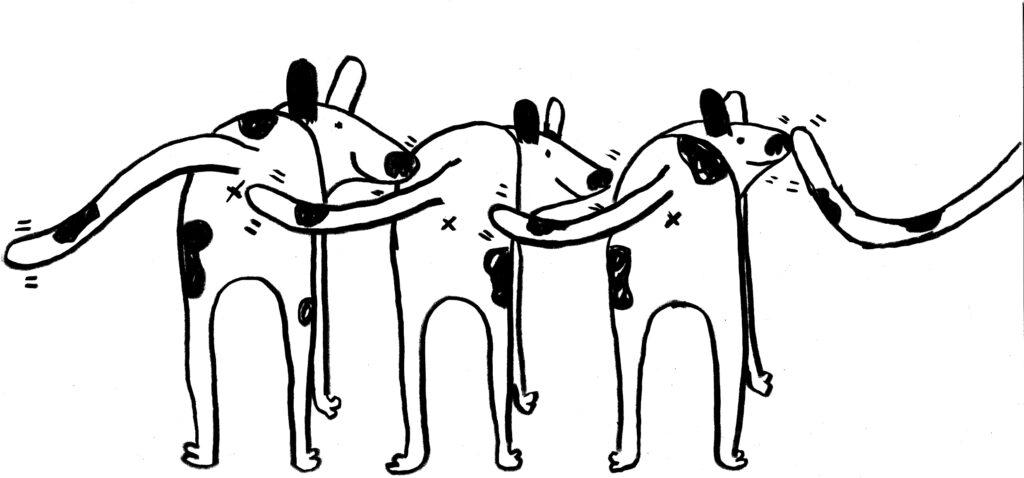
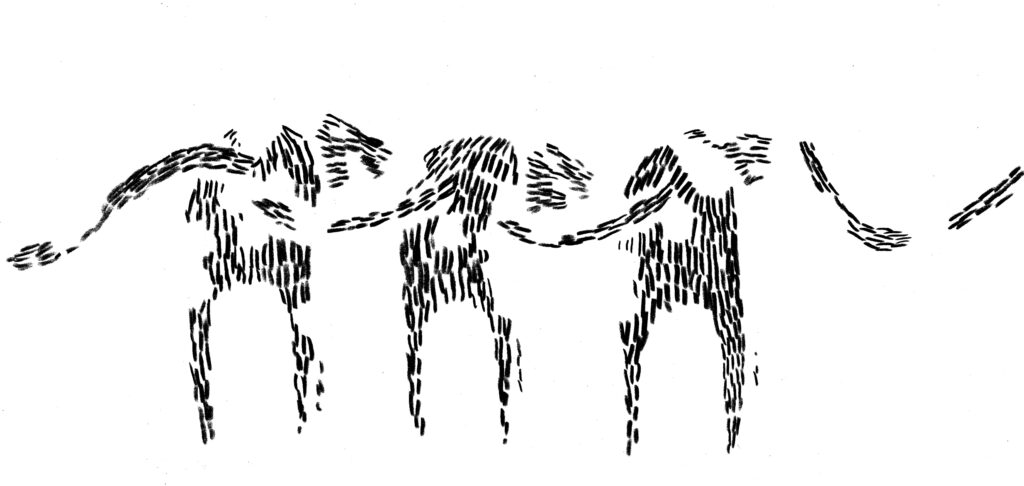
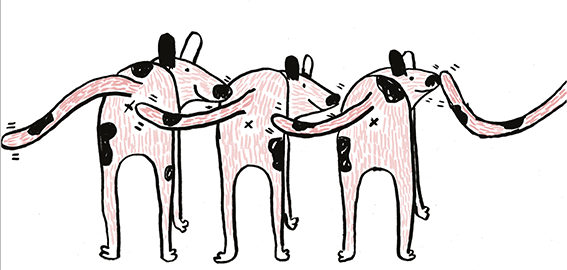
Having thought about hybridity and identified the part which interested me, the liminal space between two entities meeting, but before the outcome is defined, I realised that that liminal space, is where infinite possibilities come together, where all creativity takes place.
I was intrigued by this idea and wanted to apply it to an abstract theme such as a line. Something so crucial, yet so overlooked.
‘We have anthropological studies of visual art, of music and dance, of speech and writing, of craft and material culture, but not of the production and significance of lines. Yet it only takes a moment’s reflection to recognise that lines are everywhere.’ (Tim Ingold, 2007)
Concept & Audience
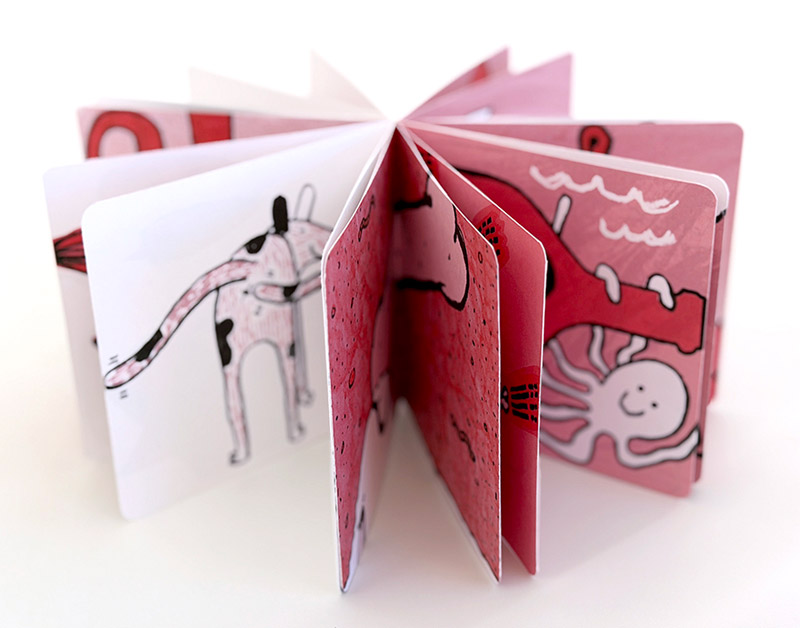
I wanted to create something unusual. To reflect infinity I thought about a hybrid book/object without a start or a finish, no right way up or down, no words to indicate which way to go. Something that has to be rotated and turned in order to see the images on each page. Without a start or a finish the hybrid object becomes infinite. The line never has to decide, it can keep reinventing itself over and over again.
This hybrid object would be aimed at younger children. A fun object that is like a book but is missing several intrinsic parts that make a book a book, such as a cover, a start and an end, and a fixed way of going through it.
The hybrid object book is colourful and attention grabbing for young children, has bold recognisable illustrations for slightly older children, has the continuous line that can be traced with a finger, has to be rotated and turned, and has the word association aspect.
I thought this would appeal to children of different ages.
Development
An infinite hybrid object needs some constraints!
The constraints I decided on were:
- Illustrations of things that are fun
- Illustrations that can be understood easily
- Illustrations that can join over page turns
- Illustrations that have a word association link
- Illustrations where all the pages link visually
‘Art lives from constraints and dies from freedom.’ (Leonardo Da Vinci, c.1480)
What would the illustrations look like? And how would the line continue throughout the object? I had envisioned dip pen and ink but I wanted the illustrations to be abstract and fun and the dip pen seemed too precise for that.
I trialled various mediums and finally settled on black pencil, it gave a nice doodle quality. I was unsure about colour. After trialling various options, I settled on two colours, Risograph black
and fluorescent pink.
What actually is an Infinity book? What would it look like? How was I going to make one? I trialled six variations to find the best way to construct a book that has no start and no end.
A bicycle wheel with the spokes coming from a central point was how I imagined it working. It took some problem solving and after several attempts, I found a successful solution.
Outcome
The final outcome is a 32-page, two-colour hybrid book-object that has 16 double-page illustrations, is wordless and each page linked via the illustrations and word association. The size is 100mm high by 210mm diameter. It can be started on any page and finished on any page because it does not have a start or an end. It can be rotated to follow the illustrations throughout.
It is a unique, imaginative item for children and shows not everything has to follow set rules.
Curiously, even though it is wordless the word association will only work in English. It would be interesting to explore this concept in Japanese, or a language with a different alphabet…
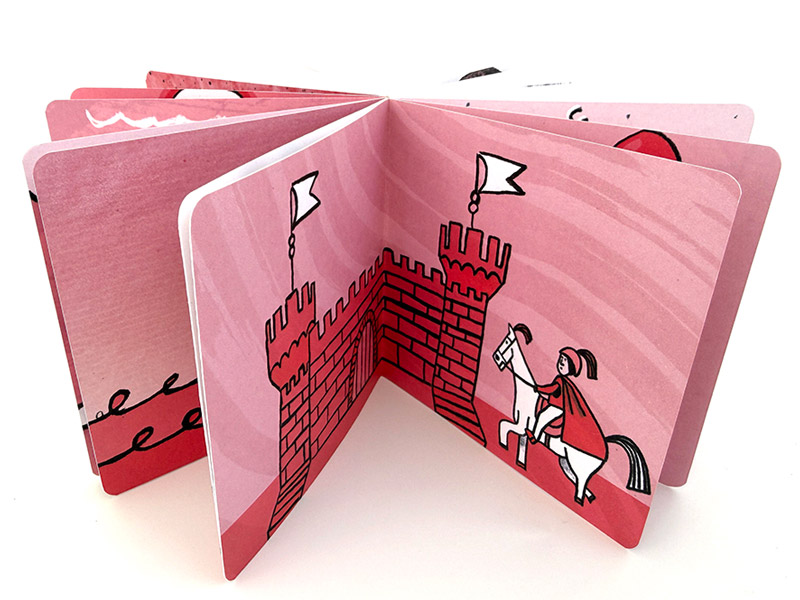
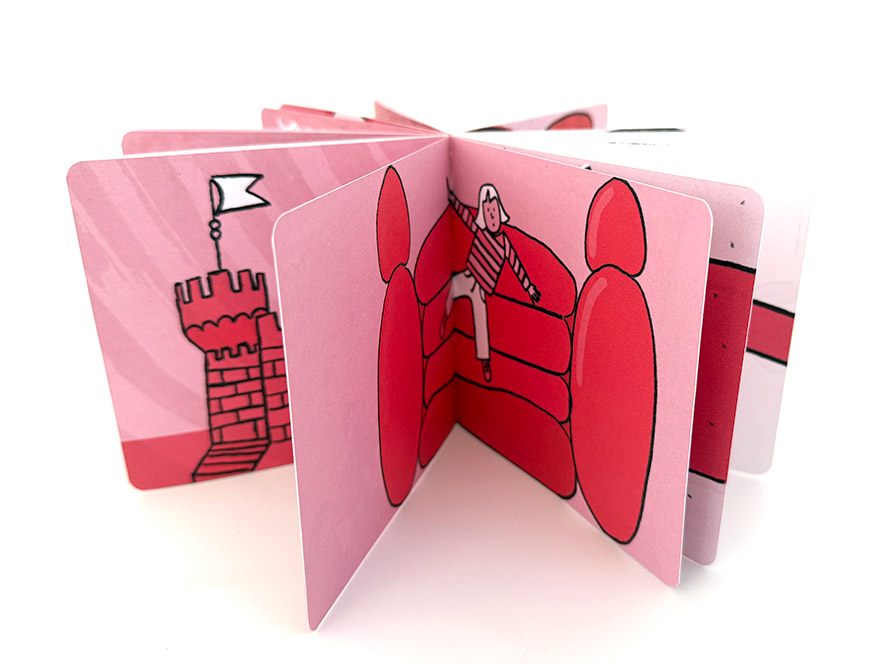
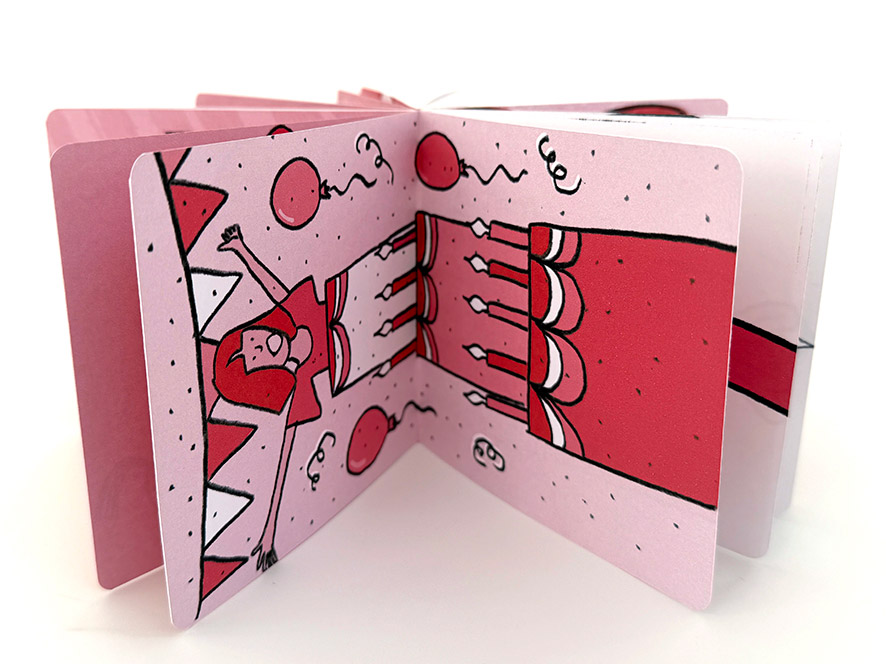
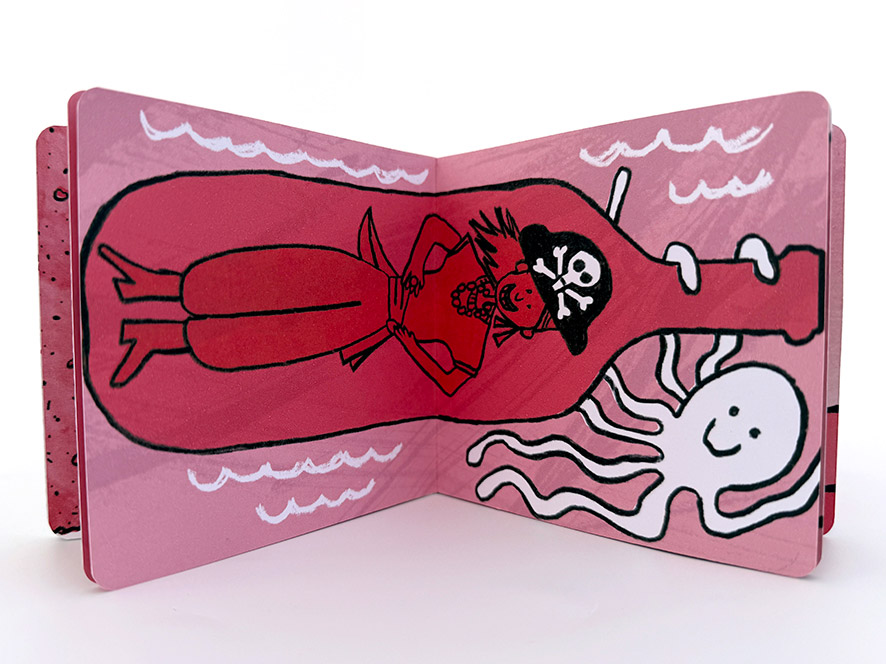
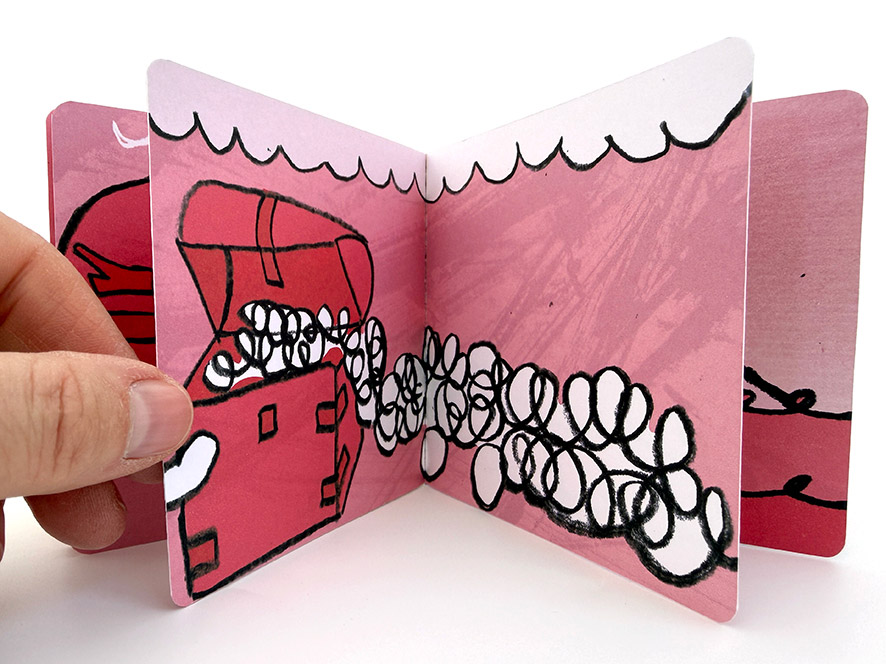
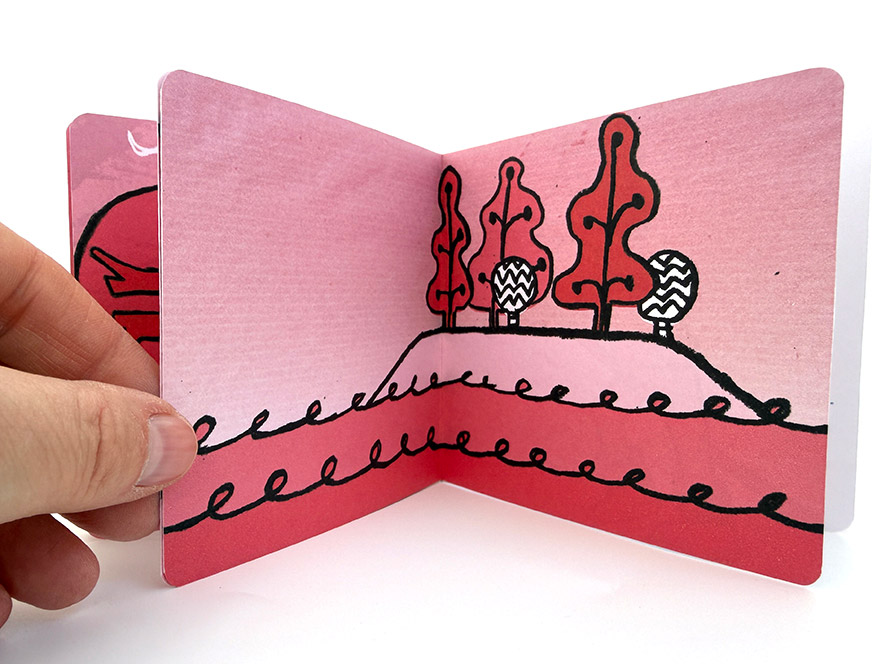
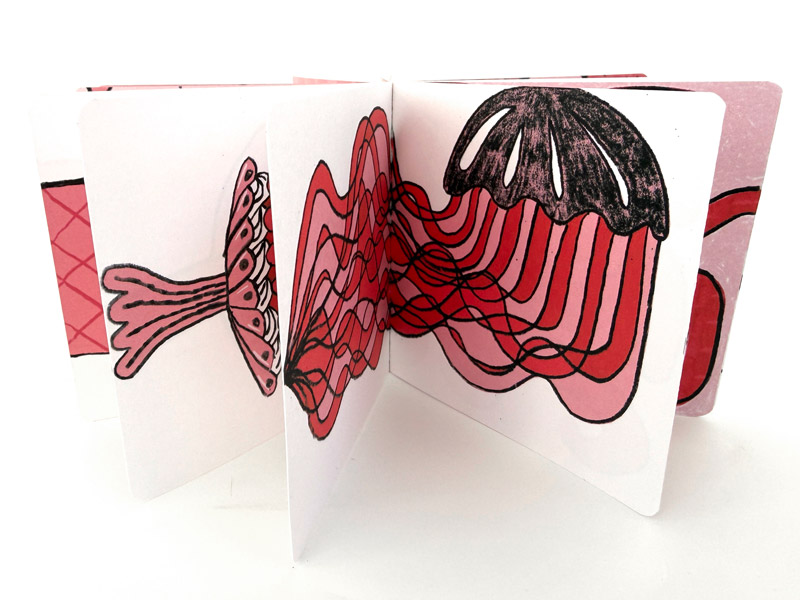
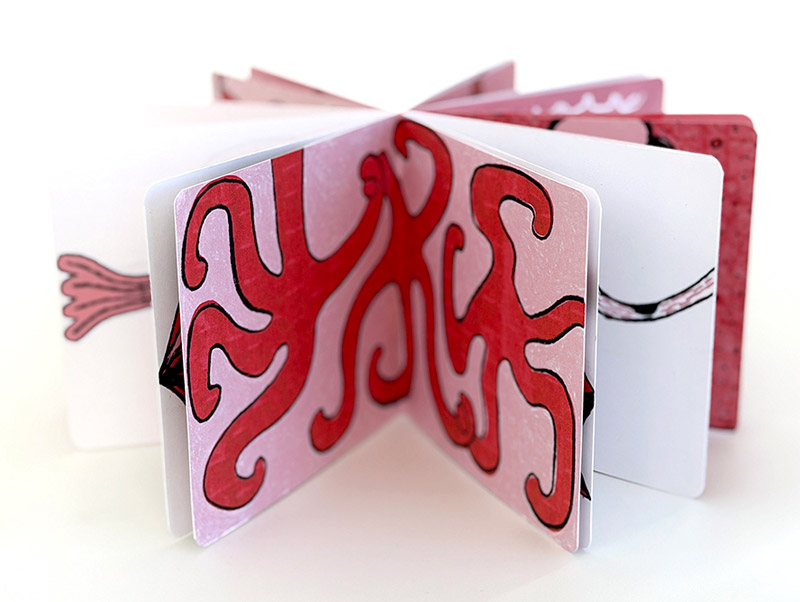
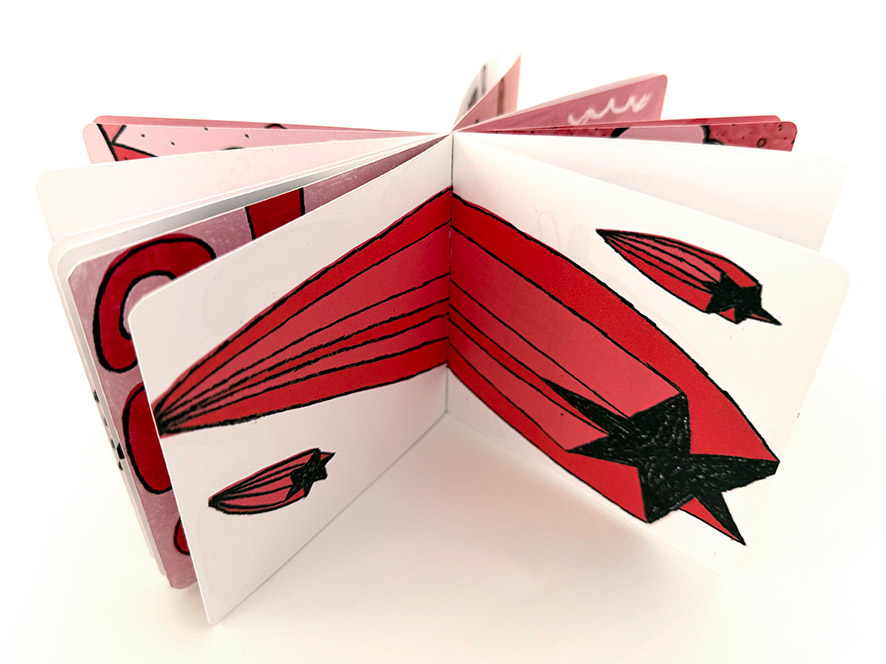
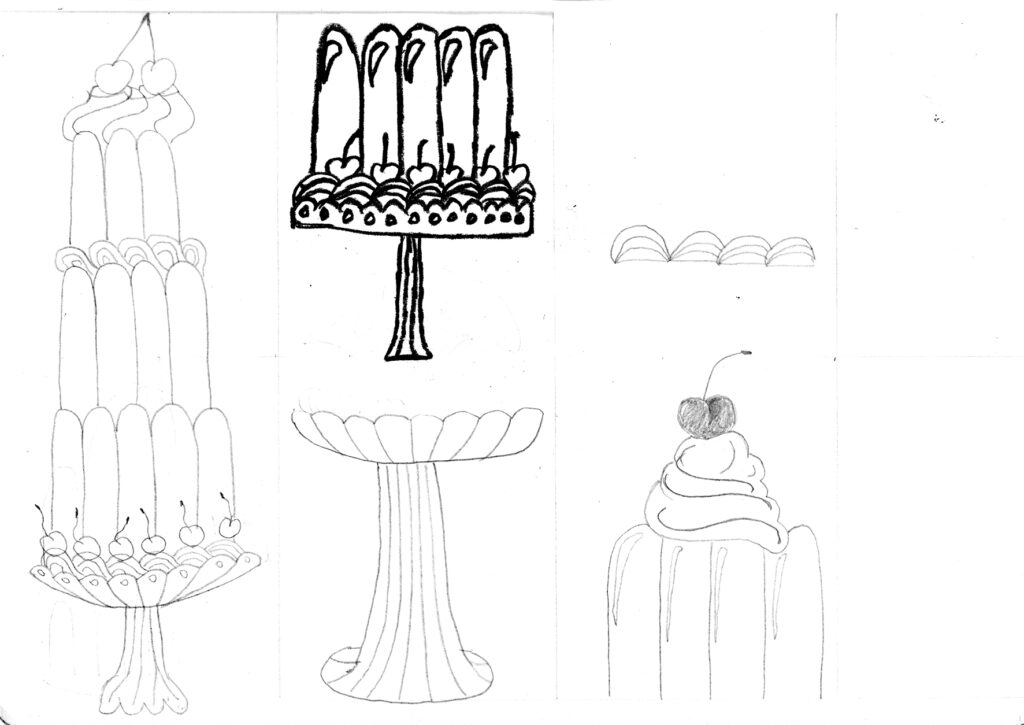
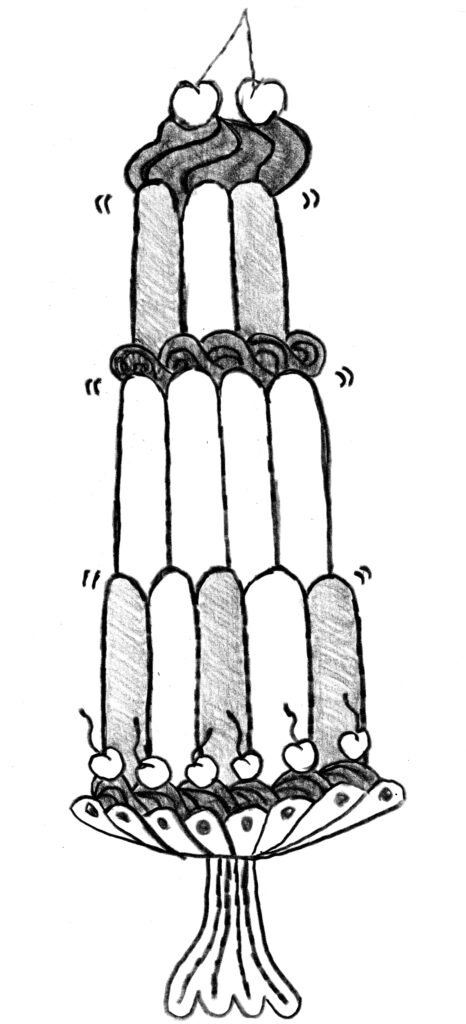
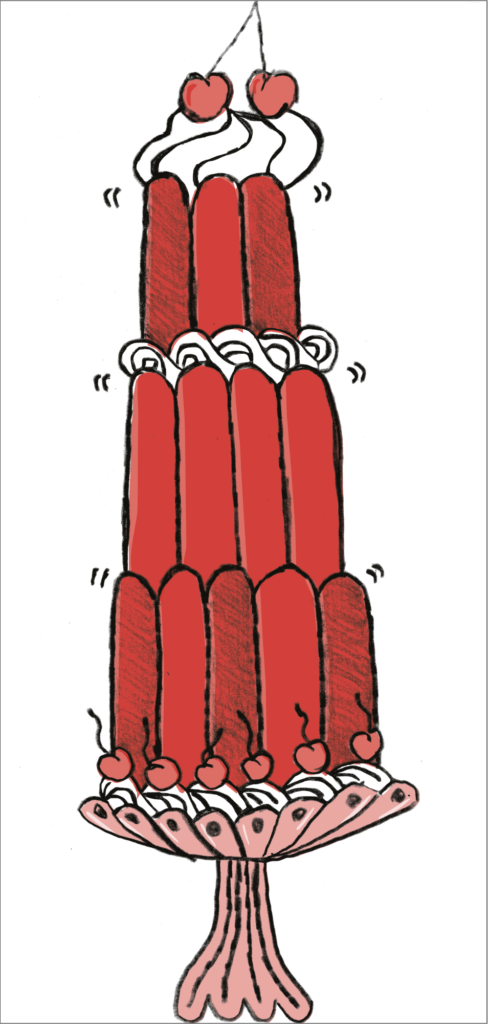
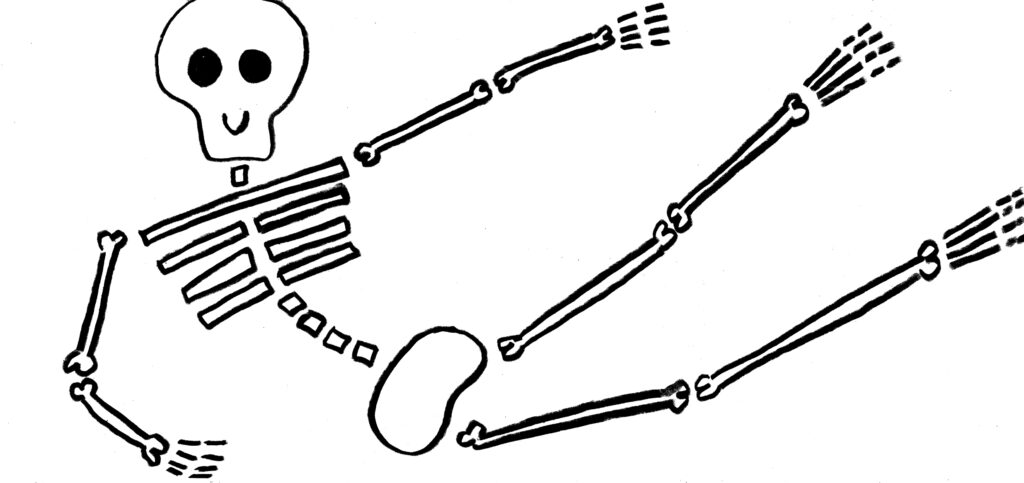
The above pictures show some of the word associations from the Infinity book.